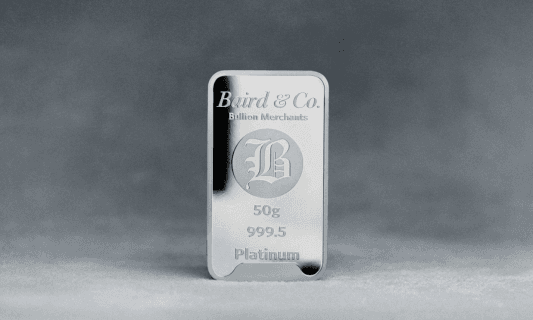
Investors often track the spot price of platinum when researching the metal, expecting it to translate directly into the price they will pay. But that number serves as a reference price instead of a retail quote. Platinum pricing includes extra costs that apply once an investor moves from monitoring the market to making a physical purchase.
Understanding how platinum reference pricing works helps investors avoid confusion and compare offers more accurately when assessing the PT price per gram against real-world retail prices.
What does the platinum price per gram actually represent?
The per‑gram platinum price reflects the spot price of the metal expressed in grams rather than ounces. Markets typically quote platinum internationally per troy ounce, and dealers convert that figure into a per‑gram reference so investors can assess smaller quantities more easily.
This price reflects the value of raw platinum at the market level. It excludes fabrication and dealer costs. Investors should treat this figure as a benchmark for where the underlying metal trades. The PT price per gram provides context, not a final buying price.
How do you convert the platinum price per ounce into PT price per gram in GBP?
Most platinum price feeds quote USD per troy ounce. To estimate the per‑gram platinum price, divide the per‑ounce price by 31.1035, which is the number of grams in a troy ounce. You can then convert the result into pounds using the current USD‑GBP exchange rate.
Different price feeds can produce slightly different results because some display mid‑market prices while others show bid and ask levels. Currency conversion can also lag during periods of market volatility. Investors should use the converted figure as a reference point, then compare it against live retail pricing to see how closely retail offers align with the PT price per gram.
Why doesn’t the spot price match retail platinum prices?
A common point of confusion occurs when retail platinum prices do not match the spot reference shown on charts or price trackers. Several practical factors explain the gap.
Physical platinum products require fabrication into bars or coins, such as recognised platinum coins. That process adds cost beyond the raw metal value. Product size also affects pricing because smaller bars or coins often carry higher per‑gram costs due to manufacturing and handling requirements.
Dealer pricing reflects available liquidity and the execution risk involved in completing a platinum transaction. Platinum has a smaller market and lower liquidity than gold, which often results in wider spreads, particularly during periods of higher price volatility.
For UK investors, tax treatment also affects retail pricing. VAT is charged on platinum bullion in the UK, which further separates retail prices from the underlying spot reference.
Checklist: how to compare platinum bar and coin prices properly
When comparing a retail platinum price against the spot reference, investors should also keep the PT price per gram in mind and approach the comparison mechanically instead of relying on headline figures alone.
First, confirm the reference price source. Some feeds display benchmark reference prices, while others show tradable bid and ask levels. Mixing these sources can distort comparisons.
Next, consider product type and weight. Premiums usually compress as bar size increases, while coins and smaller bars often carry higher per‑gram costs.
VAT must also be factored in for UK buyers, as platinum bullion attracts VAT at the standard rate. This alone can create a large gap between spot references and retail prices.
Finally, check whether the quoted price assumes vault storage, collection, or delivery. Storage and logistics costs can materially affect the final figure and should be compared on a like‑for‑like basis.
Does platinum product format affect the price you pay?
The format of platinum an investor chooses influences how closely the retail price tracks the spot reference.
Platinum bars usually provide the most direct exposure to the metal price, particularly in larger weights where fabrication costs form a smaller proportion of the total price, such as investment‑grade platinum bars. Smaller bars and coins often carry higher premiums per gram due to production costs.
Liquidity varies by product format. Widely recognised investment-grade products often trade more smoothly at resale, which influences pricing at both entry and exit.
Which platinum price should investors reference when comparing offers?
When pricing platinum for sale, dealers start with the current market reference price. They then apply adjustments based on product format and prevailing market conditions.
Because platinum markets can move sharply over short periods, dealers also factor in price risk during the transaction window. This affects how closely retail prices track short‑term movements in the spot price.
Clear pricing helps investors understand these adjustments and compare offers on a like‑for‑like basis. If you want to sanity‑check the premium and execution costs against the spot reference, compare live product pricing rather than relying on charts alone. View refined platinum products and current pricing with a Baird & Co. account.
What should UK investors watch when tracking platinum prices?
Platinum prices often respond differently to economic conditions than gold or silver. Industrial demand plays a larger role in platinum than it does for gold, which can lead to larger price movements.
As a result, changes in the spot price do not always translate immediately or evenly into retail pricing. Investors tracking platinum should focus on trends and execution conditions rather than expecting one‑to‑one price movements.
Why does transparent pricing matter when buying platinum?
Clear pricing allows investors to see how the spot reference feeds into the final purchase price. Transparency helps buyers understand the impact of premiums and taxes before committing capital.
As a refiner, Baird & Co. prices platinum products based on underlying market conditions and practical execution factors. This approach supports informed decisions for investors considering physical platinum.
How should investors use platinum price references when buying platinum?
Per‑gram platinum pricing works best as a reference tool rather than a target price. Used correctly, the PT price per gram helps investors frame value without anchoring on the wrong number. Investors who understand what the number represents can compare products accurately and assess whether pricing aligns with market conditions.
By focusing on format and transparency, investors can use pricing references to support disciplined platinum purchases rather than relying solely on headline figures.
If you plan to act on the information in this guide, compare current platinum prices and product formats against the spot reference so you can see how premiums and VAT affect the final figure. Review platinum pricing and available formats with a Baird & Co. account.

Call Us

Our Opening Hours

Email Us


Visit Us
Visit our showroom at Hatton Gardens or find more information.