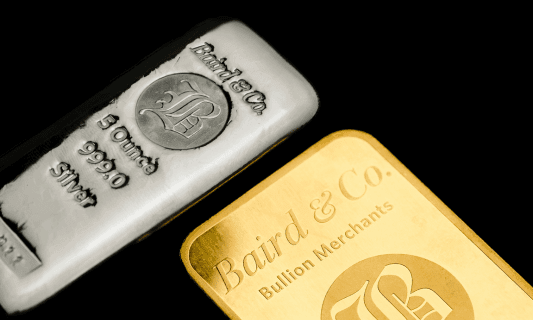
UK private investors often buy physical gold to diversify portfolios and hold part of their wealth outside conventional financial assets. When allocating capital to gold bars, you will normally choose between two formats: minted bars and cast bars. Both can meet the same investment-grade purity standards, but they behave differently when it comes to premiums, liquidity, and resale handling.
At Baird & Co., we manufacture both minted and cast investment gold bars in multiple weights, allowing investors to structure holdings around allocation size, cost control, and exit planning.
The key question is not which format looks better. It is which format supports your resale strategy.
Are Minted Gold Bars Better Than Cast Bars?
Many investment bars, whether minted or cast, are produced at 999.9 fineness. The gold content can be identical. What changes is the production method and how easily the bar can be verified when you come to sell.
Retail buyers often choose minted gold bars because tamper-evident packaging and, in many cases, serial numbers make identification straightforward. Dealers can usually verify them quickly at the counter. Investors purchasing larger weights often select cast bars to keep the premium per gram lower. Your allocation size and resale route should guide the choice.
What Investors Should Know About Minted vs Cast Gold Bars
Manufacturers produce minted gold bars by cutting them from rolled sheets of refined gold and stamping each piece with weight and purity details. They commonly seal the finished bar in tamper-evident packaging and may include serialisation. This controlled process creates uniform dimensions and a consistent finish, which can reduce questions during resale.
Producers create cast gold bars by pouring molten gold into moulds and stamping the cooled bar. The cooling process leaves slight surface variation. Suppliers typically offer cast bars in larger weights and may supply them without sealed packaging, which keeps production simpler and premiums lower.
Difference Between Minted and Cast Gold Bars
If you plan to sell in smaller units over time, presentation becomes practical. Minted gold bars with clear markings and, where included, serial numbers provide visible identification that dealers recognise quickly. That can shorten verification and reduce friction at the point of sale.
Cast gold bars prioritise weight and purity. Their finish varies slightly from one bar to another, yet the gold content can match that of minted equivalents. In wholesale settings, buyers focus on weight, fineness, and recognised refinery marks rather than surface uniformity.
If you are comparing formats now, reviewing current premiums and available weights side by side can make the difference clearer. You can view our full range of minted and cast investment gold bars to assess how pricing and bar size align with your allocation.
How Production Methods Influence Investor Decisions
Production method influences how a bar moves through the resale market. A sealed, uniform minted bar often requires fewer checks in a retail environment. That efficiency can make smaller transactions smoother.
When allocating larger sums, some investors focus first on how many ounces they secure for a fixed budget. In that context, a lower premium on a cast bar may carry more weight than presentation.
Decide which outcome matters more for you: flexibility in smaller sales or maximising total metal exposure at purchase.
Why Do Minted Gold Bars Often Command Higher Premiums?
Minted bars involve additional production stages. Manufacturers roll the metal, cut precise blanks, finish the surface, stamp detailed markings, and apply protective packaging. These steps increase production cost but tighten control over appearance and specification.
When you purchase investment-grade minted gold bars, you pay for refined gold and for that controlled manufacturing process. For investors who expect to resell through retail dealers, consistent presentation can make the transaction easier to complete.
Which Gold Bars Offer Greater Liquidity?
Start with your intended resale channel. Many investors choose minted gold bars for liquidity because dealers can verify packaging and, where present, serial numbers quickly, especially on smaller denominations such as 1oz or 100g. Investors often use smaller minted bars when planning staged sales.
In wholesale markets, 1kg cast bars trade commonly as bulk units. Professional buyers handle them routinely and assess them by weight and refinery mark. If you expect a single larger transaction, a cast bar may fit that route without additional packaging costs.
Some investors combine both formats. They hold larger cast bars to control premiums and smaller minted gold bars to retain flexibility. Reviewing available weights and current premiums side by side can clarify the trade-off before committing capital.
Are Cast Bars Better for Large Allocations?
With larger allocations, premium percentage becomes more visible. A small difference per gram becomes noticeable when purchasing multiple kilograms. Cast bars often reduce that margin compared with minted equivalents of the same weight.
However, some larger investors still select minted gold bars because they plan to sell gradually. Clear markings and consistent formatting can help when releasing portions back into the market.
What Should You Consider Before Choosing?
Before committing capital, review the practical factors:
Total investment amount and preferred bar size
Planned holding period
Intended resale channel
Sensitivity to the premium over spot price
Importance of sealed packaging or serialisation
Comparing live pricing across different bar sizes on our gold bar shop page usually makes the premium difference and resale flexibility clearer.
How Refining Expertise Supports Investment Confidence
The refinery behind the bar affects how confidently the market receives it. Dealers recognise established manufacturers and understand their production standards.
Baird & Co., established in 1967, operates as the UK’s largest gold refinery from high-security premises in East London. We refine and manufacture bullion under direct oversight, from raw material processing through to finished bars.
By controlling refining and production in-house at our UK gold refinery, we maintain consistent weight, fineness, and marking standards across our minted and cast gold bars. That consistency supports smoother verification and resale through recognised market channels.
Final Thoughts on Minted and Cast Bars
Both formats can deliver the same underlying gold content. The difference lies in cost, presentation, and resale handling.
Minted gold bars generally suit investors who want clear identification and flexibility when selling in smaller portions. Cast bars can reduce acquisition costs when building a larger position.
Look at your allocation size and your exit plan together. Those two factors usually determine which format makes practical sense.
If you would like to review available weights, current premiums, or secure gold storage options, our team can outline the differences and help you secure the format that aligns with your strategy.

Call Us

Our Opening Hours

Email Us


Visit Us
Visit our showroom at Hatton Gardens or find more information.